

Our clothes aren’t just communicating to other people, they’re communicating to us. And we can activate that effect intentionally by assigning conscious meaning to what we wear.
* Pro-tip: if you prefer audio, you can listen to this newsletter on Substack. Just find the play button on the top right corner!
Hi there,
I want to start this newsletter by thanking everyone who read and responded to my previous newsletter about Kristin Cabot. Wow, what a sore subject for women! Some of the comments on my Instagram post are insane, and they just prove how much works still needs to be done. Stay tuned for more deep dives about relationships and friendships, we need to keep talking about how we show up (or don’t) for each other.
This week I want to discuss confidence. I like The Oxford English Dictionary’s definition: a feeling of self-assurance arising from one’s appreciation of one’s own abilities or qualities. It puts the origin where it belongs: inside us, not in other people’s reactions. Before confidence is perceived by anyone else, it has to be felt internally by us.
We tend to think of confidence as something we need for the big moments, like the salary negotiation, the difficult conversation, the pitch to a new client.
But I’d argue we need it even more in the small ones, like when we want to raise our hand in a meeting and ask the question everyone else is too afraid to ask. When we need to say no to the thing that doesn’t serve us, even when saying yes would be easier. Or when we decide to try the thing we’ve been thinking about for years — the business, the book, the move — instead of waiting until we feel ‘ready,’ which may never come.
And I believe confidence is passed down, not necessarily genetically, but visually and energetically. Our kids are watching, and when they see us comfortable in our own skin — asking questions, saying no and trying new things — it gives them permission to do the same.
No matter how confident we think we are though, confidence is a feeling, and like all feelings, it comes and goes. Nobody feels confident 100% of the time. Fashion can be seen as frivolous, but what if I told you that our clothing is sending signals to our brains and, by choosing to wear a few specific things, we can summon more confidence?
So I did some research, and picked 6 things you can wear (1 of them is invisible), and 1 that you should not wear - small yet fascinating things I learned that you can start doing today.

6 Things To Wear
1. Start with Your Shoulders
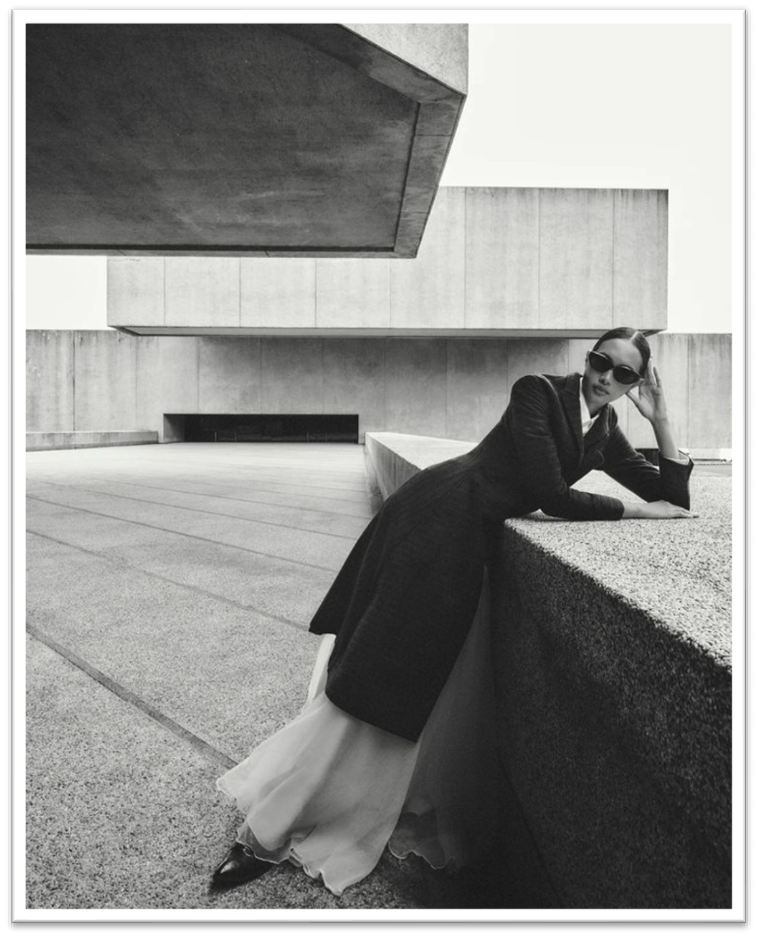
This one sounds simple, but it does more than you think. A garment that sits correctly on your shoulders naturally pulls your posture open — chest lifted, spine straight — without you having to think about it. Professor Karen Pine at the University of Hertfordshire found that when women feel stressed or unhappy, they neglect over 90% of their wardrobe and default to baggy, body-hiding clothes. It’s an understandable instinct to shrink, camouflage, and disappear. But the research suggests the opposite helps more: wearing something that fits well, flatters your body, and reminds you of a time you felt good. The shoulders are where this starts. When your jacket fits there, everything else follows.
2. The Texture Secret
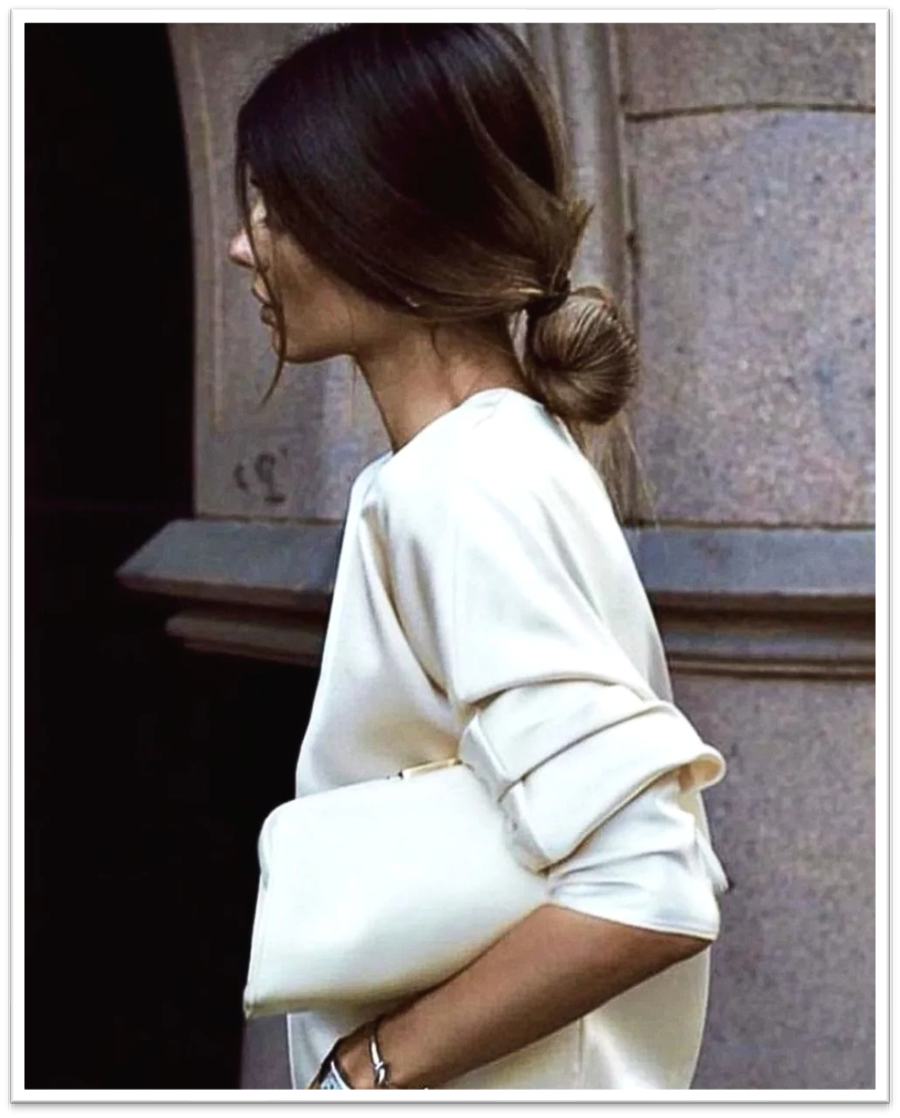
This is the one most people don’t think about. The texture of what’s touching your skin all day is sending constant signals to your brain through your somatosensory system — the network that connects touch to emotion. Research in textile psychology shows that soft, smooth fabrics promote relaxation and reduce cortisol, while rough or stiff textures can trigger low-level stress and anxiety that you may not even consciously register. That silk lining, the weight of a well-made wool blazer on your shoulders, the softness of quality cotton against your wrists aren’t luxuries. They’re neurological inputs that either support or quietly undermine your confidence all day long. The next time you reach for something in your closet, close your eyes and touch it first. If it doesn’t feel good in your hand, it won’t feel good on your body. And your brain will know the difference.
3. Enclothed Cognition: Give Your Outfit a Story
Our clothes aren’t just communicating to other people, they’re communicating to us. And you can activate that effect intentionally by assigning conscious meaning to what you put on.
Researchers Hajo Adam and Adam Galinsky coined the term Enclothed cognition in a study that shows that what we wear influences how we think, feel, and act.
Participants who wore a white lab coat described as a “doctor’s coat” showed an increase in focus and attention. But when the identical coat was described as a “painter’s coat,” or when participants didn’t actually wear the coat, there was no cognitive boost. Only when they wore it and believed it carried a specific meaning did their performance change.
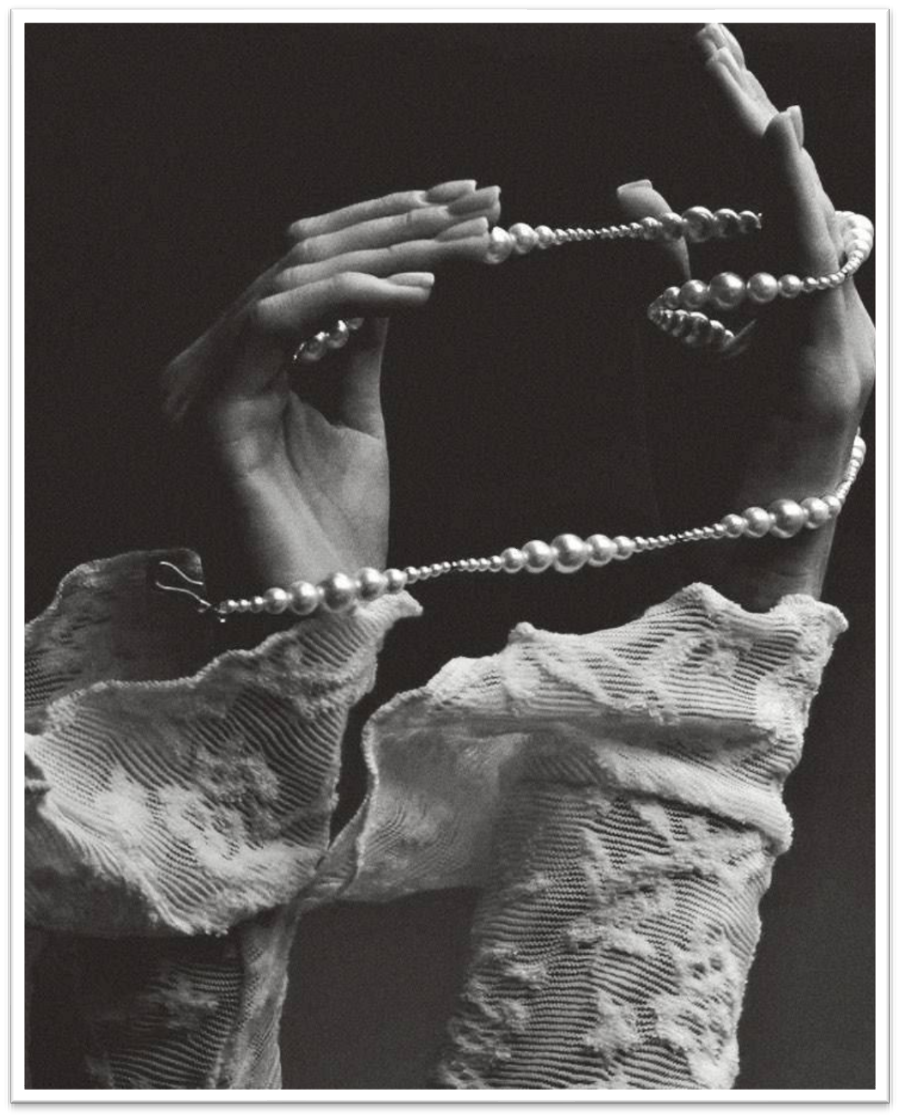
So try this: before you leave the house, give what you’re wearing a meaningful story. Wear that blouse because red is your power color. Put on that lucky blazer that you wore when you closed that deal. Wear your grandmother’s pearl necklace, it carries her strength. The science says the boost comes from what you believe about what you’re wearing, not from what anyone else sees.
4. Go Monochrome
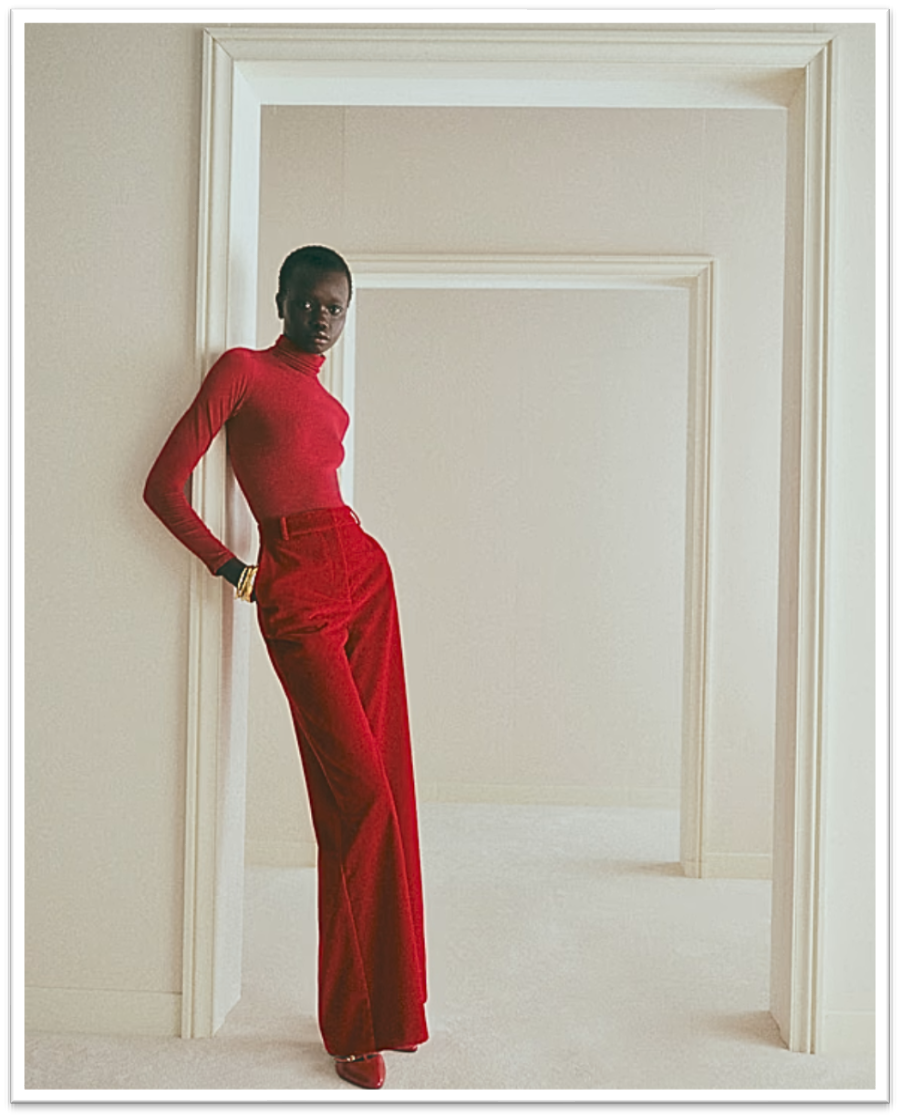
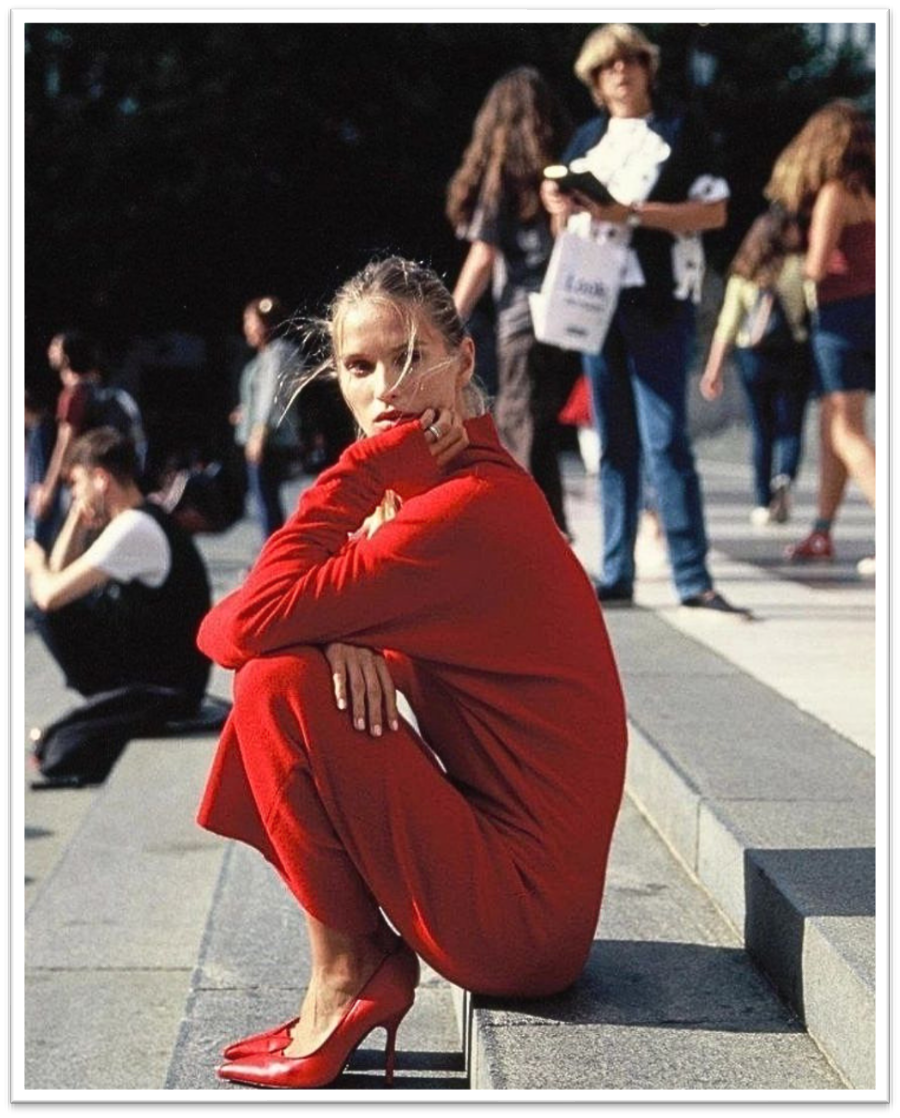
Wearing a single color from head to toe does something subtle but powerful: it eliminates the low-grade decision fatigue of wondering whether your pieces “go together” and projects a unified visual identity that reads as intentional and authoritative. A 2014 study in Color Research & Application found that wearing red increased feelings of confidence and attractiveness. But here’s the insight that matters more than the specific color: coherence increases confidence. An all-cream look, a full tonal navy, head-to-toe espresso — the monochrome signals to your own brain: I thought about this, I’m deliberate, and I’m in control. Try it for a day and notice how it changes not just how others respond to you, but how you feel moving through your own life.
5. Get Dressed on Purpose — Even When No One Will See You

The act of intentionally choosing what to wear is a psychological ritual that signals to your brain that the day has started. Professor Karen Pine’s research found that choosing uplifting clothes, even on a day you’re not leaving the house, can help shift a low mood. And here’s the flip side that’s equally important: staying in pajamas makes your brain read it as rest mode. You’re not just comfortable, you’re cognitively downshifted. I’m not saying wear a blazer to make coffee. I’m saying put something on that makes you feel like you, and you may feel a lot more confident in your Zoom meetings.
6. Scent: The Invisible Clothing
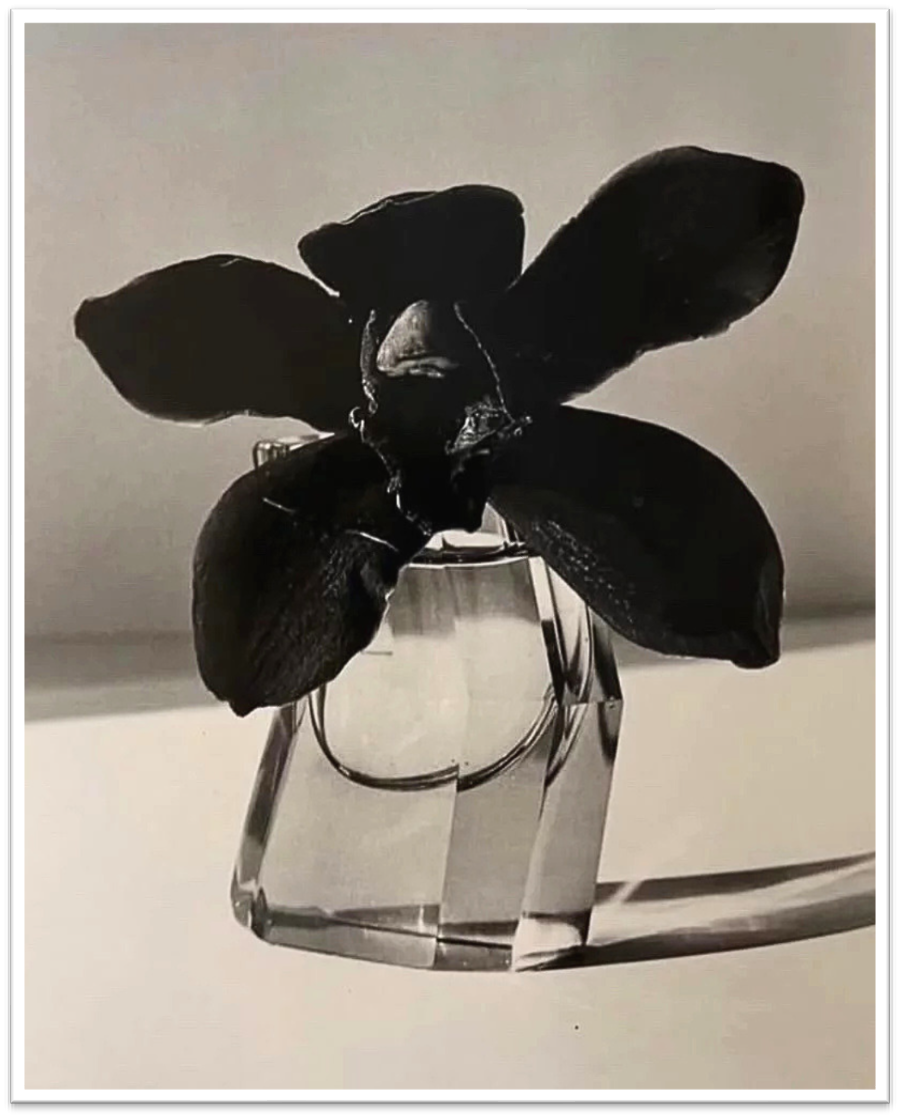
In previous studies, 65% of women surveyed reported feeling more confident when they wore perfume. Wearing a scent doesn't just change how others perceive you, it changes how you carry yourself. Perfume works like enclothed cognition for your nose. When you spray something that makes you feel powerful, your body language follows. You fidget less and stand differently.
In a study by Higuchi et al. (2005), video observers rated women wearing perfume as more confident, and video analysis confirmed that there were fewer anxious behaviors — such as face touching and fidgeting — when the women wore fragrance. Here’s the fascinating part: when men wore a scented deodorant and were videotaped introducing themselves, women (who couldn’t smell anything) rated them as more attractive on muted video. The confidence the scent gave the wearer changed their body language enough to be visible on screen.
So if you have a favorite scent, wear it when you need a little confidence boost.
What NOT To Wear
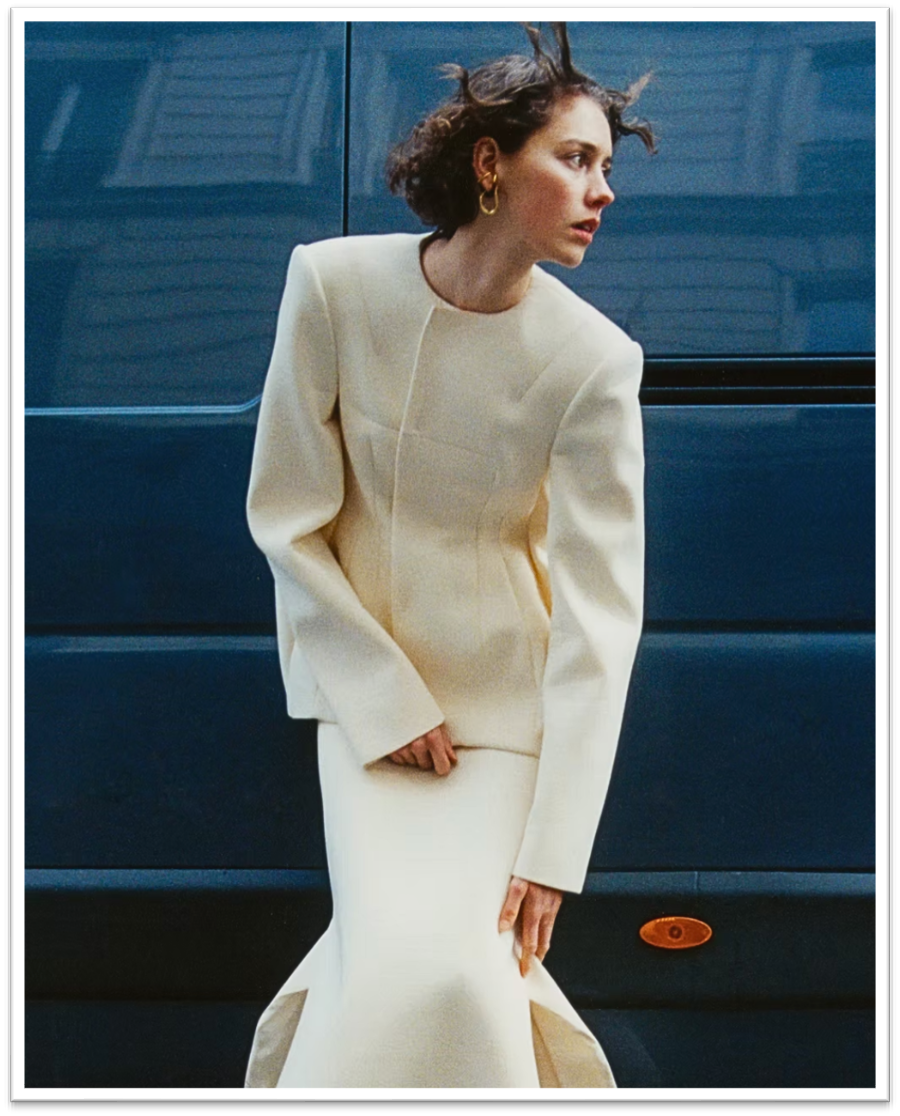
Women are much more likely than men to wear painful, distracting, or restricting clothing. And if you spend the day tugging, adjusting, or sucking in, your clothing is stealing your cognitive resources. Every time you pull down a hem, adjust a strap, or check whether something is riding up, you’re redirecting brainpower away from the meeting, the conversation, or the idea toward managing your appearance. The research calls it self-objectification.
So don’t choose ill-fitting, too tight or too lose, or any clothes that are going to make you feel self conscious. Your confidence level will tank, and nobody needs that. Remember that you should wear the clothes - and not the clothes wearing you.
None of these are about performing confidence for other people. That’s a different conversation — and it’s one we’ll have soon, because how women are perceived based on how we have to present externally, and the double standards that come with that, deserves its own space.
Today is about the inside job. Confidence isn’t something you either have or you don’t. It’s something you practice every day. Fashion can be a powerful thing. Use it to your advantage.
Sending love,
Patricia