

Toshiko Takaezu: Worlds Within

I once tried my hand in the world of pottery, and even though I was guided by my experienced husband, let me tell you something: if you're feeling a bit too confident and in need of a reality check, look no further. It's a swift humbling exercise, served on a pottery wheel. First, your resiliency is tested with each twist of the wheel. Then, waiting for the clay to dry tests your patience and resolve, and applying glaze is a challenging lesson in trust, especially for a recovering control freak like me: you don't know if you've won or lost until it's too late. According to my husband, therein lies the thrill – the anticipation of unveiling its hidden beauty, while accepting that it will never be exactly what you imagined (what??). And the kiln… another test of faith and precision, where one wrong setting can turn hours of work into ash. Yet, it's also the place where clay transforms into art, a testament to the resilience and creativity of those who dare try.
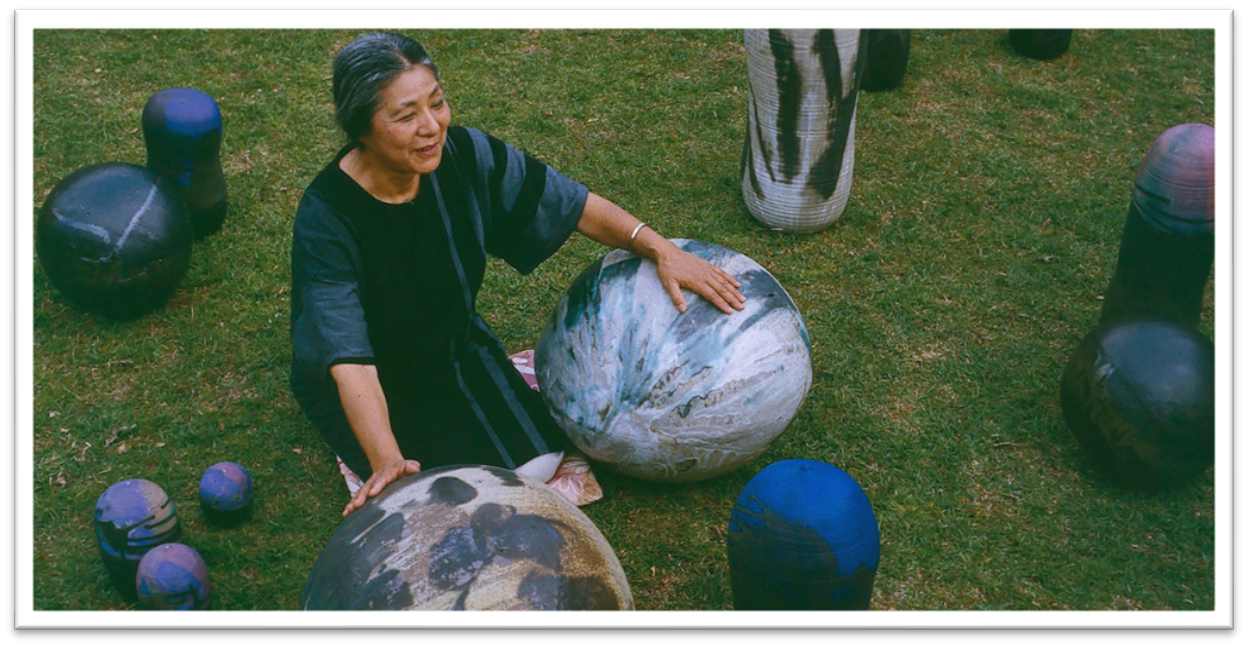
Yes, absolute torture if you ask me. 😅 This brief attempt at this ancient art left me in complete awe of the artists who breathe life into clay, infusing it with soul, spirit and meaning (and made me realize that a maker I am not). So I was thrilled that the The Isamu Noguchi Foundation and Garden Museum invited me for an amazing treat: a preview of their major retrospective Toshiko Takaezu: Worlds Within, guided by the exhibit’s co-curators: art historian Glenn Adamson, Noguchi Museum Curator Kate Wiener, and composer and sound artist Leilehua Lanzilotti. The Noguchi Museum is always worth a visit, and with this exhibit, even more so. Its impressive body of work gives you a glimpse in the heart and mind of this Japanese American artist who started from very humble beginnings in rural Hawaii to become one of the most conceptually innovative American artists of the last century. ❤️
Curator Kate Wiener was so generous to spend time and answer my questions, scroll down to check my interview with her among Toshiko Takaezu’s stunning pieces.
PS: Toshiko Takaezu: Worlds Within’s monograph is available to preorder, and will be released on April 30th.
Hope you enjoy the read, see you next week for more good stuff. Sending love,
Patricia
Tell us about your trajectory in the art world: have you had to face challenges because you are a woman? If so, please explain. There have definitely been challenges, but I have had the great fortune to work for and with some incredibly talented women and gender non-conforming colleagues and artists who I have learned so much from in terms of how to combat sexism and other related systemic inequities in the art world. My first job out of graduate school was working for Johanna Burton, who was then the Keith Haring Director and Curator of Education and Public Engagement at the New Museum in New York and is now LA MOCA’s first woman director. She was, and continues to be, an incredible role model for me, and I have been very inspired by her approach to questions of identity, agency, representation, and power in art and the art world.
What do you look for when deciding on an exhibit? What are the main factors that influenced your decision, and which were the ones that led you to co-curate the exhibit with Glenn Adamson and Leilehua Lanzilotti? There are so many factors that go into deciding on an exhibit, and The Noguchi Museum is certainly a unique space to organize shows because the museum is itself a work of art designed by Isamu Noguchi. Even when bringing in other artists, when I curate here, I am always taking inspiration from the urgent questions and themes that Noguchi engaged with, which ranged from our relationship to the environment and to each other to the nature of play and civic space, and I try to stay true to the spirit of openness, exploration, and hybridity that defined so much of his practice. Takaezu was a dear friend of Noguchi’s, but beyond this personal connection, she also shared many of the same values that Noguchi held and built into this institution.
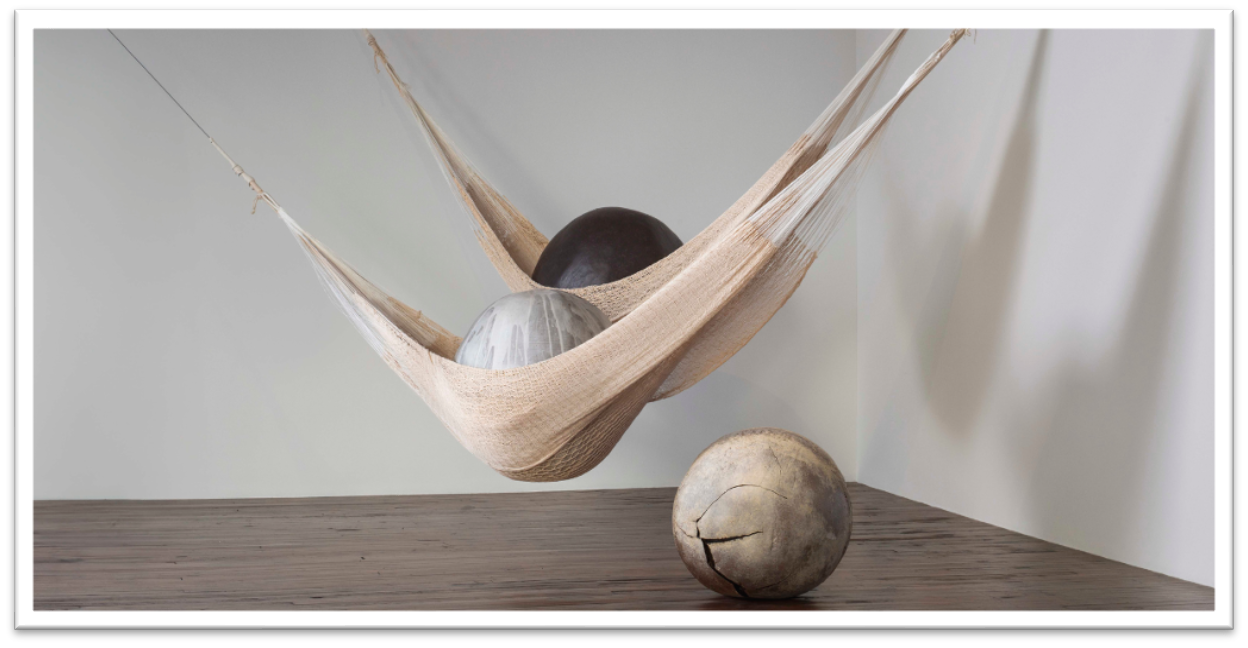
Glenn Adamson had a long-standing interest in Takaezu’s work, which was further stoked after curating a retrospective of artist Lenore Tawney’s work. Tawney was a pioneering fiber artist who was a dear friend of Takaezu. Tawney and Takaezu in fact often displayed their work together in hybrid displays—one of which inspired an installation in our exhibition. Through Glenn’s work on the Tawney project, he began a conversation with The Toshiko Takaezu Foundation about Takaezu’s legacy and had the idea to organize a retrospective of her work. Glenn was connected with The Noguchi Museum’s former senior curator Dakin Hart who had included a selection of Takaezu’s work in his 2016 exhibition Museum of Stones, and the idea arose for The Noguchi Museum to organize the retrospective—this felt like a particularly exciting idea because of the resonances between Noguchi and Takaezu’s work, and their friendship. Leilehua Lanzilotti has been a longtime collaborator with the Noguchi Museum, and was brought in early to begin thinking about how sound could be woven through this show.
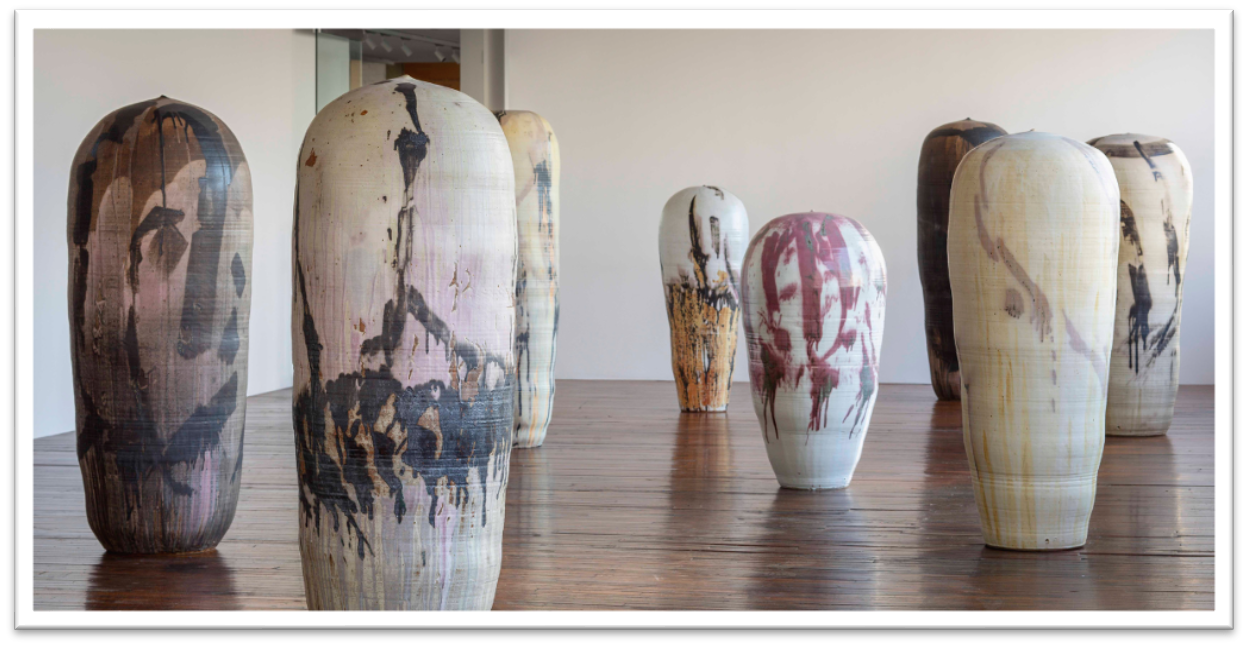
Which piece moves you the most in this exhibit and why? This is a hard question, and I think the answer might change every week! One work that I am particularly moved by right now is Canopus (c. 1995–98), a monumental work that is part of Takaezu’s Star Series (c. 1994–2001), five of which we are very lucky to have on loan to us from the Racine Art Museum. The Star Series is a collection of 14 large-scale masterworks that she installed as an environment, inviting visitors to orbit around her celestial forms. Circling around Canopus you can get lost in its layered glazes which vary from an atmospheric haze of milky pinks and greens to bold and expressive black brush strokes. The incredible balance in this piece between subtlety and strength is awe-inspiring to me. When making these large-scale pieces she spoke about looking down into the open vessel and feeling as if the “whole universe is right inside the pot.” I think this work retains that sense of containing a “world within” (to borrow the title of the show)—it absolutely draws you in.
How did Takaezu‘s background as a Japanese American (with Okinawan roots) living in Hawai‘i and growing up humble inform her work? The landscape of Hawai‘i was a lifelong source of inspiration for Takaezu. It informed her palette and the atmospheric aesthetic she brought to all her work. Takaezu frequently returned to Hawai‘i to visit family and created a great deal of work there. Co-curator Leilehua Lanzilotti has also thought deeply about how Takaezu conjures the multisensory landscapes of Hawai‘i through vision, touch, and notably, through sound.
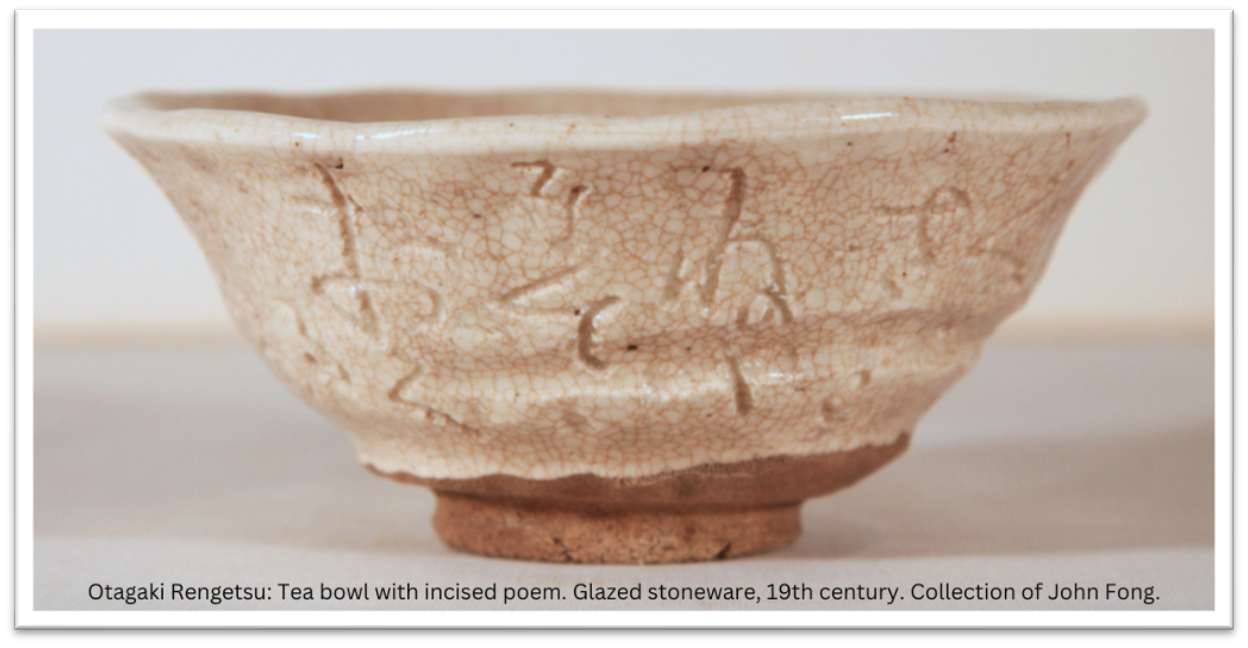
Takaezu also maintained an active lifelong engagement with East Asia. Her interest and investment was informed by her background as the daughter of first-generation immigrants from Okinawa, but not just a matter of heritage. Takaezu went on an eight-month trip to Okinawa and Japan beginning in the Fall of 1955 during which she actively sought out ceramic practices both traditional and avant-garde. She searched for the work of Buddhist nun, poet, and ceramicist ŌTAGAKI Rengetsu (1791–1875), whose small vessels delicately inscribed with verses of poetry had long captivated her. She also developed a close connection with master potter KANESHIGE Tōyō (1896–1967), who revitalized techniques associated with sixteenth century Bizenware pottery, and encountered the experimental sculptures ofYAGI Kazuo (1918–1979), along with many other artists. Takaezu was also influenced by East Asian ink painting and Okinawan weaving techniques, among other practices. Her work represents a unique synthesis of these varied influences and areas of study.
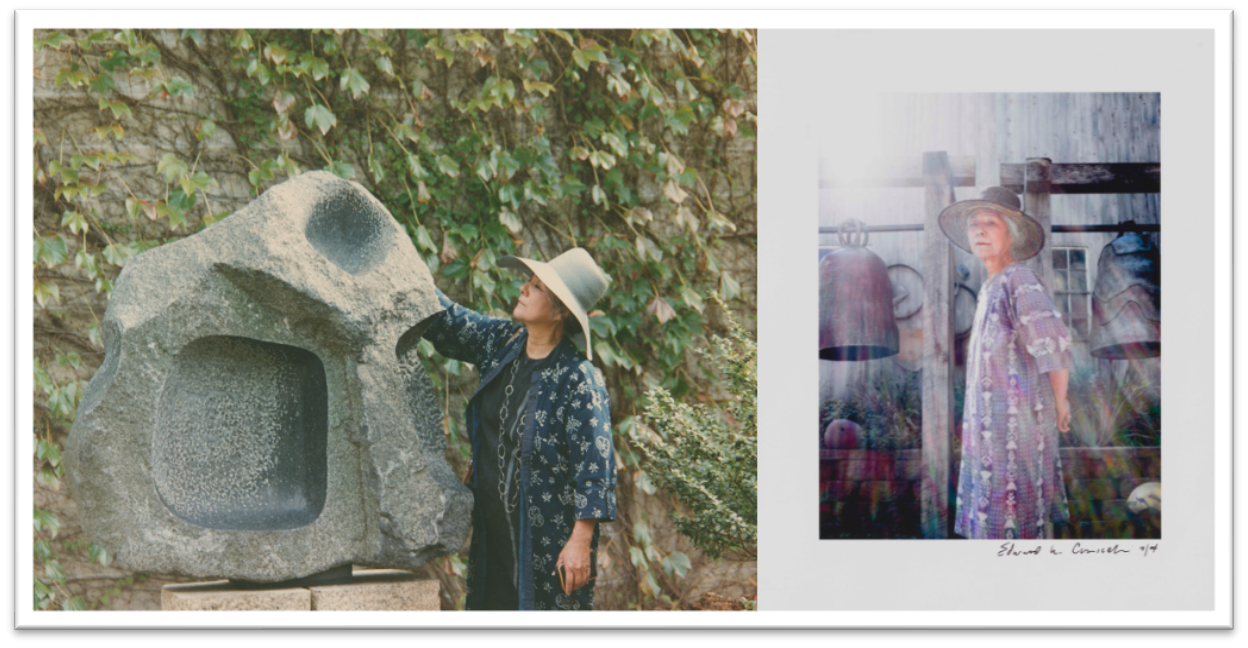
Isamu Noguchi and Toshiko Takaezu were friends. As artists, what did they have in common? There are a number of beautiful resonances between their lives and work—particularly in the ways they both destabilize artistic hierarchies, model new hybrid practices and demonstrate a deep appreciation for nature. A major focus of the Takaezu retrospective is revealing the captivating ways in which she was able to conjure and construct multisensory landscapes both within the bounds of singular works and in immersive installations. In his own way, Noguchi shared this ambition. Exhibiting Takaezu’s works within Noguchi’s museum, a space he designed to be a total environment and a living landscape, gives us the opportunity to underscore this connection. Although this is a solo retrospective of Takaezu’s work, we are also including one work by Noguchi in the show—a sculptural ceramic vase that he created in Japan in 1952 while he was living there and working with local potters. Takaezu would work with many of the same artists during her own pivotal trip to Japan in 1955–56, and this is another cross-connection highlighted in the exhibition.
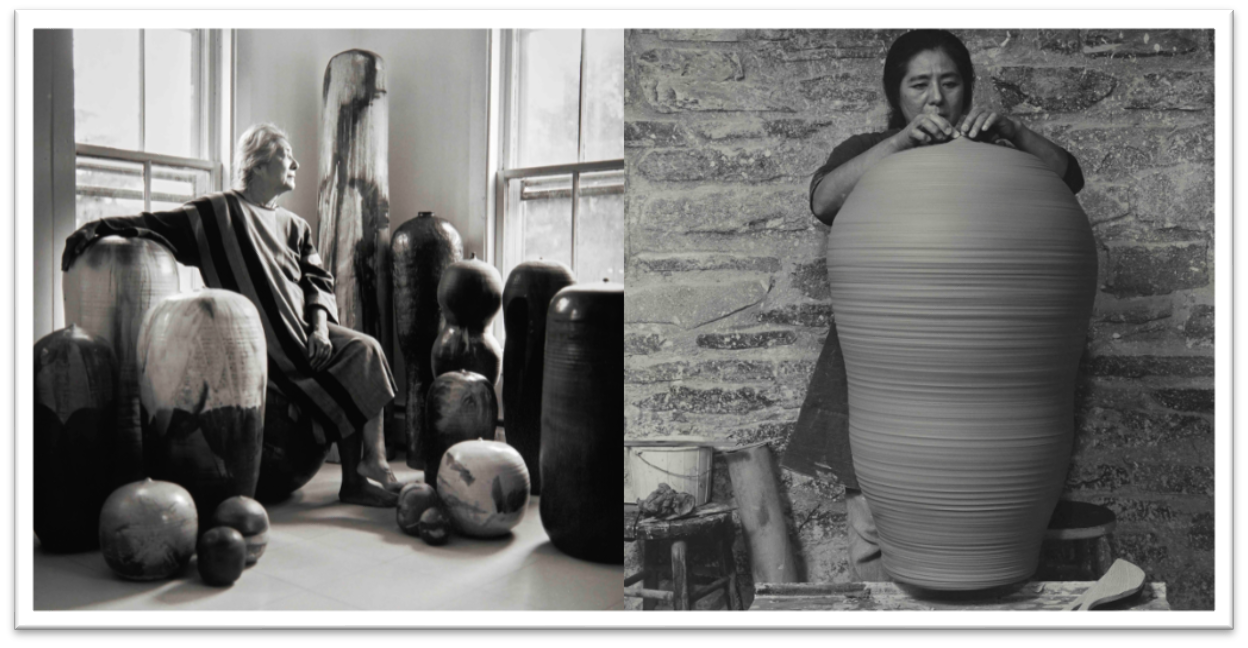
What was the artistic community’s perception of Toshiko Takaezu? Japanese women are not usually at the forefront of the arts, do you know how she felt about that? Takaezu was celebrated in her lifetime and likely recognized by her peers as the single most significant ceramicist working on the east coast. It is only now, though, that she is gaining recognition in the broader art world, and the full scope of her artistic contribution is being appreciated. In terms of her experience as a woman of Okinawan heritage, she spoke about her frustration with certain limiting stereotypes—how, for instance, many people were quick to make superficial associations between her work and Zen Buddhism, and rely on reductive East/West binaries. I could not say how she felt about Japanese women artists' level of recognition generally, but she did claim that the Buddhist nun, poet, and ceramicist ŌTAGAKI Rengetsu (1791–1875) was a deeply important source of inspiration for her.
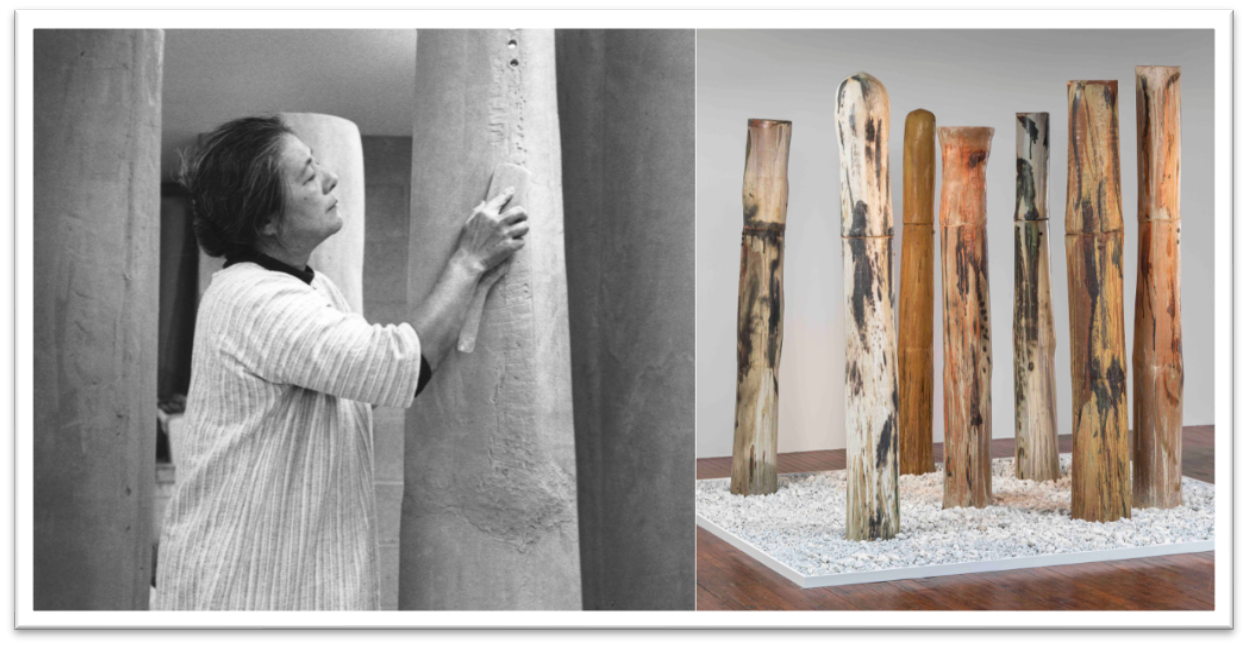
What is Toshiko Takaezu’s most important contribution?
One of Takaezu’s most important contributions was how she radically expanded the artistic possibilities of ceramics. She fused the expressive languages of painting and sculpture, treating the surfaces of her vessels as vast three-dimensional canvases; while also redefining what a ceramic vessel could be on the most fundamental level, creating “closed forms” that harbored a hidden interior space activated only through imagination. She even highlighted the sonic or resonant qualities of her vessels, often sealing a small piece of separated clay within her closed forms that could be shifted about like a rattle. Takaezu was also a weaver and painter, and often constructed unique multi-media installations where her ceramics, textiles, and paintings operated together. Takaezu sought to create work with poetic depth—a “mystery” or “unsaid quality,” as she put it—that resonated beyond and outside of any limiting strictures.
THANK YOU AGAIN KATE WIENER AND THE NOGUCHI MUSEUM FOR THIS INCREDIBLE HONOR ❤️
All photos courtesy of the Noguchi Museum. Photo credits in order of appereance:
Tom Grotta, Macario Timbal, Nicholas Knight, Nicholas Knight, John Fong, Isamu Noguchi, Edward Cunicelli, Bobby Jae Kim, Evon Streetman, Walter Chandoha, and Nicholas Knight.
Products with a * means that they are not women and LGBTQI+ owned, or that we have not been able to verify if they are LGBTQI+ owned before sending out this newsletter. A sponsored or paid partnership section is marked with a §
All of the linked products are independently selected and curated by Matriark and our team. We may earn a commission If you buy something from our links.
Disclaimer: The information provided in this newsletter is for general informational and entertainment purposes only and is not intended to replace professional medical advice, diagnosis, or treatment. Always seek the advice of your physician or other qualified health provider for all questions regarding a medical condition. Never disregard professional medical advice or delay in seeking it because of something mentioned in this newsletter. Matriark’s Founder and employees are not medical professionals, and any opinions or views expressed should not be construed as medical advice. Reliance on any information provided in this newsletter is solely at your own risk. Matriark and any of its affiliated parties shall not be liable for any errors or omissions in the information provided or for any actions taken based on the information shared. It is strongly advised to consult with a qualified healthcare professional for individualized advice and guidance tailored to your specific circumstances.
Matriark® 2025 All rights reserved