

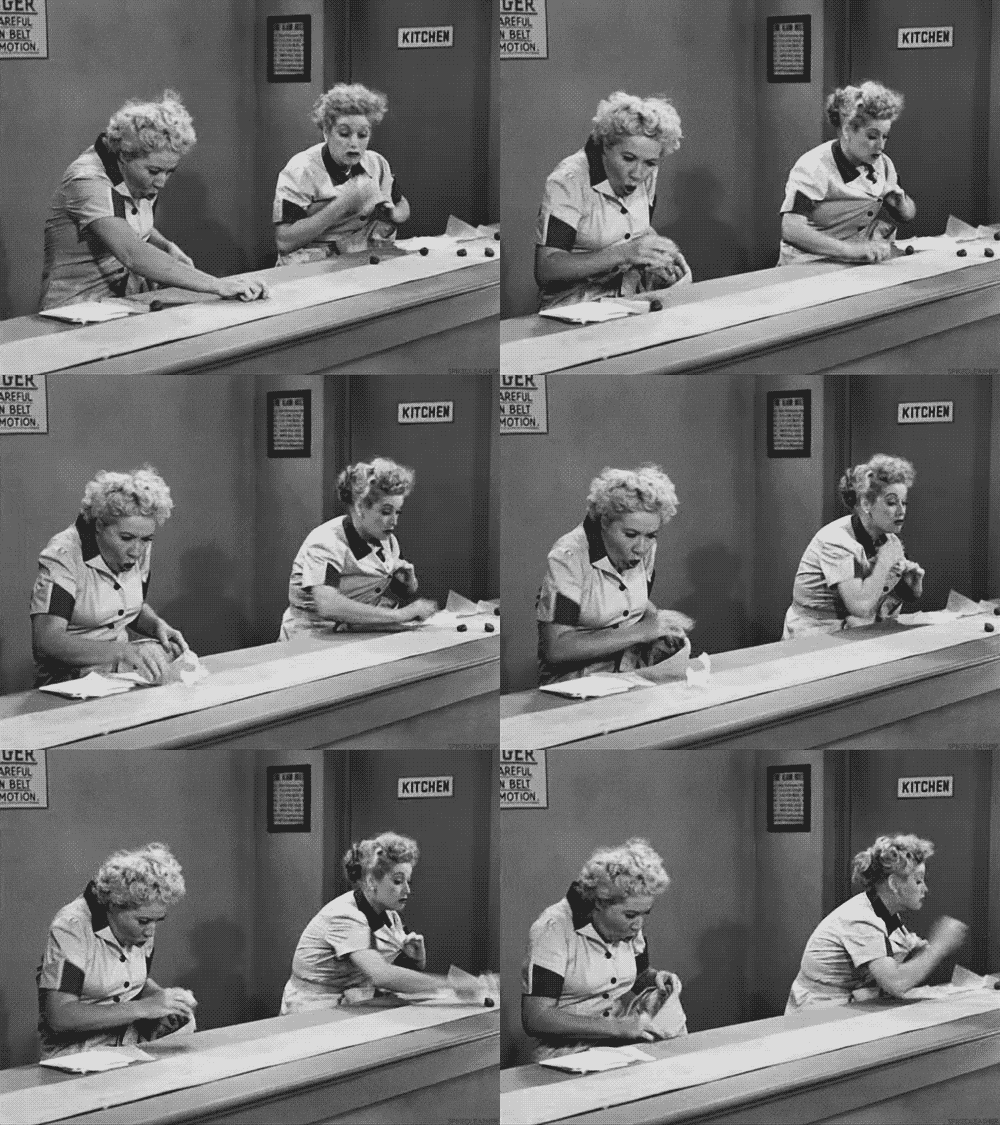
“She was cold, but also intelligent, trained, efficient, and operating inside a structure that sometimes treats patients like the chocolates in the I Love Lucy conveyor belt scene. Except that patients are not chocolates, staff shouldn’t work like Lucy, and the consequences are not funny”
Hi there,
I recently had major (preventative) surgery. I am well, healthy, healing, and deeply grateful. But this I know for sure: being a patient is like being a project manager under anesthesia.
I was treated by extraordinary doctors in a state-of-the-art hospital, and learned first-hand how surgeons, nurses, and staff are working around the clock, saving lives, and doing deeply human work inside an inhuman system.
The surgery itself was long, eight hours, and successful. I planned, prepared, and asked many questions beforehand. What no one prepares you for is what comes after. You are groggy, vulnerable, barely in your body, and suddenly responsible for managing your own care inside a machine that never slows down and often feels like a roller coaster.
My 2 main surgeons were off because it was the weekend, so I saw their teams. But… shifts! So every 12 hours, a new team. New faces, new questions, different moods and bedside manners. Rinse and repeat.
“My back really hurts.”
“Yes, eight hours on a table will do that.”
[Silence] “Okay, so can we treat it? Painkillers are no working on my back”
“Sure, we will get you a patch.” (off protocol)
The nurse forgot about it, then her shift ended. Rinse and repeat. Explain again to a new nurse. Wait again. The patch was finally applied two hours later.
“My stomach burns.”
“It’s nausea from the anesthesia, right?”
“I had nausea earlier but this doesn’t feel like nausea. Could it be oral medication on an empty stomach?”
“Maybe, but probably from anesthesia.”
[Silence] “Okay, so can we treat it?”
“OK, I’ll get the anti-acid” (off protocol)
At another point, after being administered a muscle relaxer, my blood pressure dropped. Despite the exhaustion, I explained clearly, calmly, repeatedly: “It’s probably the medication. My dad had the same reaction.”
Every nurse rechecked my vitals. Nah…
“It’s probably the drowsiness from anesthesia.”
Twelve hours later, my blood pressure mysteriously normalized.
“Could it be because my medication wore off?”
“Maybe, but nah… probably the anesthesia.”
I don’t think the nurses or doctors were purposefully cruel or careless. But I’m convinced that something more insidious takes over their jobs: a generalized selective hearing to protect protocol over person. Getting off script for the sake of the patient means you have to listen, work harder, justify it to your boss, and it may cost more (even your job).
Then came the discharge conversation that almost pushed me over the edge.
I live 2.5 hours away. I was still nauseated, weak, and burning with stomach pain. I said multiple times that I did not feel safe getting into a car.
A young doctor from one of the surgical teams looked at me and said, flatly:
“I know you’re not feeling well, but with medication, you’ll be able to be discharged later today.”
She visited twice and said the same thing, even though I repeated how I felt. When she returned for her last visit, already dark outside, she asked:
“It’s been many hours, so you should be feeling better and ready to go home, right?”
“I feel exactly the same,” I said. “I am not comfortable leaving. I already spoke to the nurses and my husband agrees, we can’t leave today.”
Her face dropped. She was visibly annoyed. I had disrupted her plans and interrupted the system. I threw the wrench in the machine.
“Okay,” she said. “We’ll plan discharge tomorrow.”
Then she turned around and left. No “I hope you feel better” or “Is there anything else I can do?”
She was cold, but also intelligent, trained, efficient, and operating inside a structure that sometimes treats patients like the chocolates in the I Love Lucy conveyor belt scene. Except that patients are not chocolates, staff shouldn’t work like Lucy, and the consequences are not funny.

To add insult to injury, we already know that women are far more likely to be gaslit in medical settings. Our symptoms are minimized and our instincts questioned. Self-advocacy is applauded until you are medicated, exhausted, scared, and still expected to argue for your own safety, only to be labeled a difficult patient.
I had every possible advantage: excellent insurance, top-tier doctors, a non-life threatening issue, I was conscious and had an advocate with me. My husband did not need to speak. His presence alone was enough to lend credibility to what I was already saying. Infuriating, but true.
If this was hard for me, what happens to patients without all these advantages?
This newsletter is a call to look honestly at a system that forces even the most compassionate professionals to move too fast, listen too little, and default to protocol over human beings. I can’t change the Medical-Industrial Complex on my own, but I can share what I learned in hopes you are prepared if you ever need it. These are not medical nor legal tips, just things I learned through my experience.

🩺 Never go alone. The hospital I stayed only allowed 1 night for my husband (instead of 2 or 3), but we pushed hard to get this. I wasn’t going to spend the night alone after major surgery. Advocacy is nearly impossible when you are vulnerable. Bring someone who can listen, remember, repeat, and push when you cannot. Ask them to take notes on everything said and done. Ask them to stand up next to you whenever possible when doctors and nurses arrive. If they can’t stay overnight, debrief them in the morning and ask them to push for the things you need. If you aren’t able to communicate after a procedure (ask your doctor about those details!), make clear of your specific preferences to your Advocate before you go.
🩺 Be very specific. Vague pain gets dismissed and can lead to mistakes. Ask your advocate to help you communicate clearly. If you get intimidated by a doctor or nurse, ask them to give you ideas of what it could be, and maybe you can buy a little time and find the right word. Sometimes they may unintentionally “lead the witness” (it happened to me - “it’s nausea, right?”), but try to stick to it and don’t give in. If you have a hard time saying no, you can say “maybe, but this doesn’t quite feel right yet”. But don’t agree if you know it’s not true.
🩺 If you know something in your body, don’t let it go. Ask again, say it differently, ask for confirmation. Ask your advocate to repeat it. Persistence is self-preservation, and sometimes crucial for your survival. Act like your life depends on it - because it does! When my back hurt so much and painkillers wouldn’t help, I asked the doctor to check my lungs for pneumonia. I knew it was probably muscle pain, but I asked for peace of mind and they agreed to check. I was relieved.
I am profoundly grateful for my care, and I am equally convinced we can and must do better.
We are one unique body, and one precious life. A system designed to save us when we cannot save ourselves should not require this much work when we are this vulnerable.
More soon on my surgery.
For now, my priorities are rest, healing, and a refusal to be quiet when something is not right.
Love,
Patricia
Our medical system is infuriating. I appreciate your voice on these issues. Wishing you a smooth speedy recovery Patricia! Xo
there is so much inherent bias in medicine. and doctors are not well trained in how to be aware of their own biases. this is all such great advice. surgery is scary enough…the recovery can be so scary if your concerns/pains/reactions aren’t acknowledged. I strongly believe “care” needs to find its way back into healthcare. the cold clinical response is not caring.
that all said, I think this is such an important post. and I hope you are healing well and feeling more like yourself as each day passes! xo