


* Pro-tip: if you prefer audio, you can listen to this newsletter on Substack. Just find the play button on the top right corner!
Hi there,
A working woman makes a ton of money, has an affair, gets caught, and when confronted, tells her husband she loves him — but asks for the divorce a day later. She packs her bags and walks out the door without saying goodbye to their children. She moves to a two-bedroom apartment, and when her 12-year-old daughter wants a bedroom at her new place, she declines and turns the spare room into a home office instead. She also declines a proposal from her husband of a 50/50 custody agreement, keeping only dinner on Thursday nights. She tells her husband she is “done with that stage of her life where she would parent a child.” All of this during the quarantine in 2020.
When she comes back to the house to tell the girls about the divorce, she doesn’t even take off her coat, but proceeds to ask her husband — who is still in shock from being cheated on and abandoned — to make her a sandwich. He obliges to not make the situation even more stressful for his children.
What would the internet call this woman? Can you just imagine?
And what would they say about the man? Would they say “Why did he make her a sandwich? Her husband is a doormat”? Or “He’s a rich man, so he doesn’t deserve any sympathy”? Would they say “he should have known better, it’s his fault she she changed their prenup”? I think not. My guess is the public would condemn this woman as a selfish witch to be shamed in public, and this man is a hero for putting the kids first and being civil even though he was betrayed.
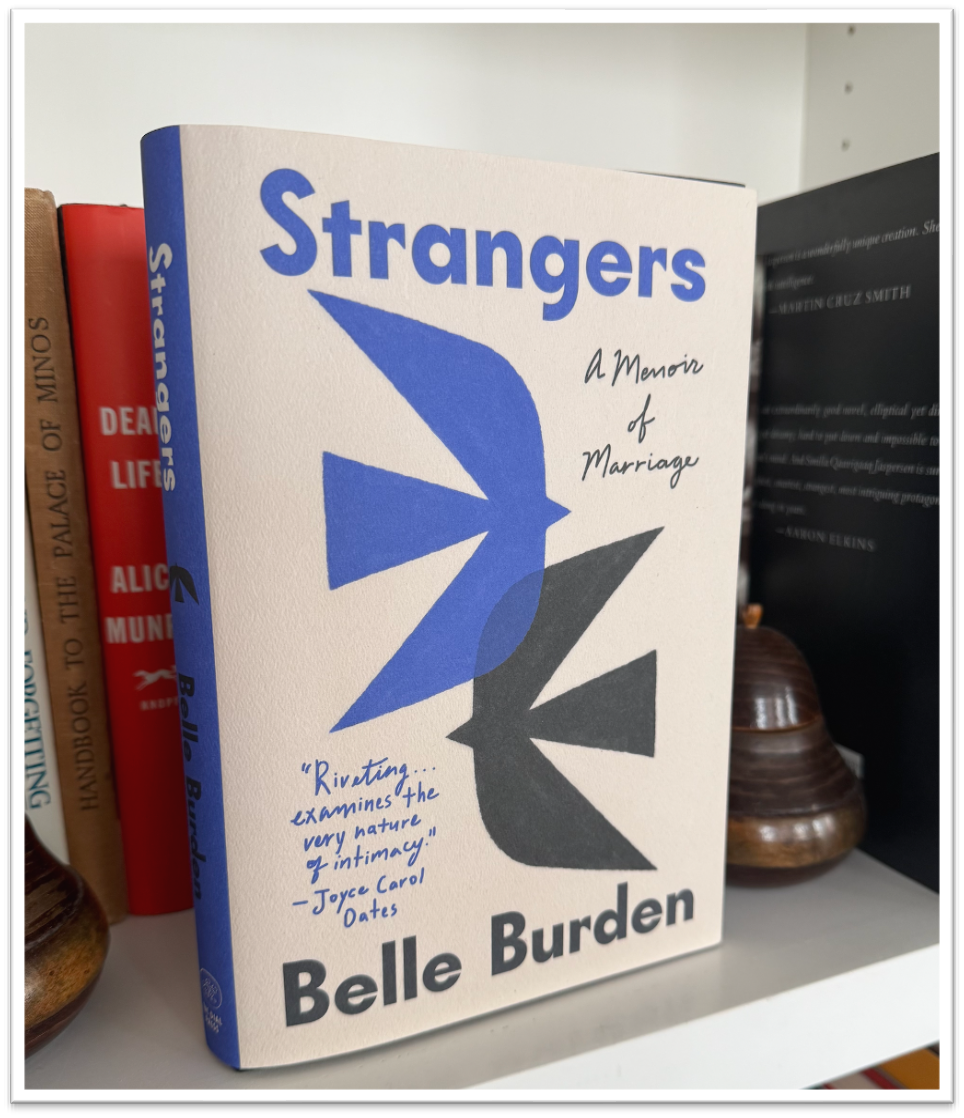
This story, although real, happened in reverse. This happened to Belle Burden, and her husband was the one who cheated, as she detailed in her New York Times bestselling book Strangers. The internet is angry for her and she has a lot of support. But I’ve been baffled by the criticism, which has been equally passionate.
It turns out, when people can’t defend the man, they find another way to blame the woman. In Belle’s case, it was her privilege, and this is what I want to discuss this week.

Belle’s grandmother was Babe Paley, the iconic NYC socialite and Vogue editor. Her father Carter Burden was a New York City councilman, a descendant of the Vanderbilt family, and the former owner of The Village Voice and New York Magazine. Belle went to Harvard. She has trust funds, plural, and she acknowledges all of this openly in the book.

Belle is what pop culture would call the ultimate trust fund baby. Or a nepo baby. A white, blonde, beautiful, and wealthy woman. Privileged indeed.
But does her privilege give us a pass to focus our criticism on her rather than on her husband?
Does the fact that she has money exonerates the man who had the affair, abandoned his family, and financially engineered the marriage to benefit himself — and make HER the party to blame?
Well, that’s exactly what’s happening. Her wealth isn’t being used to contextualize her story. It’s being used to dismiss it. And when we dismiss it, saying she’s too rich, too connected, and too privileged to deserve compassion, aren’t we still doing the same thing : centering the woman’s behavior and ignoring the man’s?
Listen, I’m no white privilege apologist, and I’m not saying Belle Burden needs saving. Yes, a wealthy woman’s resources will most certainly cushion a crisis or a tragic situation. I am well aware of the system’s inequalities, and I’m not here to defend them. But think about it: if this is the kind of backlash a white, wealthy, well-connected woman endures, I can only imagine what a woman of color would face in the same situation.
The truth is: women are grading women. We are putting thresholds on what other women should go through to be deemed deserving of camaraderie, solidarity, or just plain sympathy.
We are saying that most of us will never pass the test — we are not struggling enough, not broke enough, not powerless enough, not likable enough, not thin enough, not modest enough, not feminine enough, not (fill in the blanks) enough. And we never will because the goal post is ever-changing — perfectly designed to make whatever happened the woman's responsibility. In Belle’s case, it’s her wealth and social status that serves as the “yes, but.”
And what we fail to recognize is that by grading each other, we are setting the bar impossibly high for women and unacceptably low for men — so low that even the Henry Davises of the world walk free.

I wrote about this same pattern a few weeks ago with Kristin Cabot. And here it is again: a different story, a different woman, the same mechanism. When a man behaves badly, we examine the woman. And we hold her accountable for not predicting, preventing, or perfectly responding to his failures.
Belle Burden said that women have been taught to “fill in the hole that men left, to be quiet about men behaving badly, to move on with grace.” She described breaking that silence as feeling like jumping off a cliff — terrifying and exhilarating — because she was setting fire to the rules she had always lived by.
And how did some women respond to this?
They called her a doormat and said she should have known better.
Before Belle wrote the book, she published an essay about it - which her ex approved. Belle recounts that Henry didn’t really see anything wrong with the narrative, and that he believed that, as a man, he was allowed to leave in this way.
The cultural change we need isn’t just about holding men accountable — although yes, we need that too. It’s about women choosing, consciously and daily, not to be the enforcers of each other’s punishment. It’s about recognizing that when we call Belle Burden a doormat, we are doing exactly what emboldened Henry Davis to say he “could leave in this way”: we are focusing on her, not on him.
The only people who can prove him wrong are us. Not by turning against each other, but by refusing to.
Sending love,
Patricia
Thank you for bringing this conversation to light and articulating it so well, Patricia. The ways in which we dismiss other women, are the ways in which we dismiss ourselves. We are not doing ourselves any favors by keeping the focus and criticism on women (exactly where the patriarchy wants us to focus).
Oooo the reversal you made really got me. Boof